Hybrid Work Models Reshaping U.S. Business by 2025
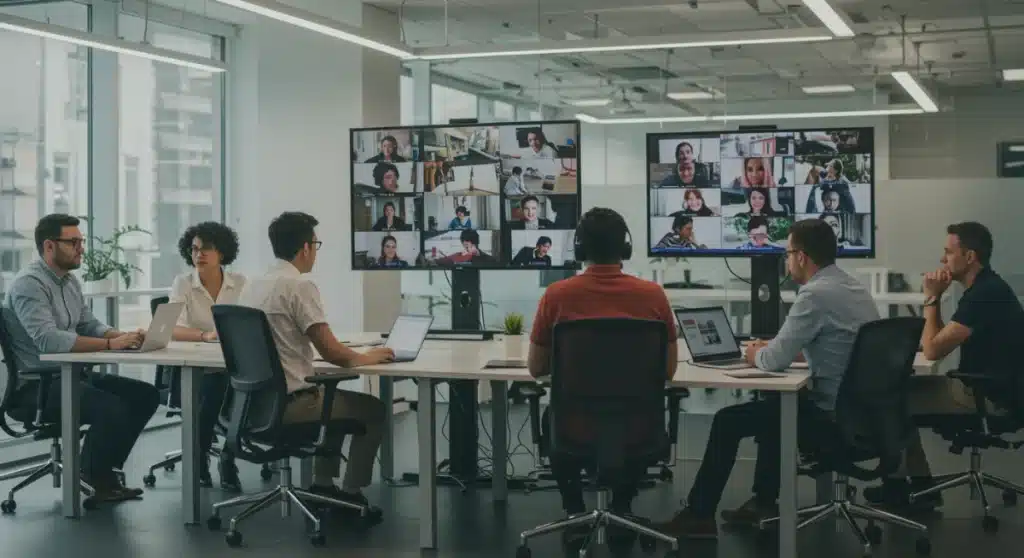
Hybrid work models are redefining the American workplace, integrating remote flexibility with in-office collaboration to create a more adaptable and employee-centric operational framework by 2025.
As we approach 2025, the future of work in the U.S.: how hybrid models are changing business operations by 2025 is no longer a theoretical discussion but a tangible reality reshaping the American economic landscape. Businesses nationwide are grappling with the profound implications of this shift, seeking to harness its benefits while mitigating potential challenges.
The evolution of hybrid work and its adoption
The concept of hybrid work, a blend of in-office and remote work, has rapidly evolved from a temporary solution during the pandemic to a strategic imperative for many U.S. companies. This model offers flexibility, allowing employees to choose where and how they work best, thereby influencing job satisfaction and retention.
Initially, the transition was abrupt, driven by necessity. However, as organizations gained experience, they began to recognize the long-term potential of a more flexible approach. This has led to a more deliberate and structured adoption of hybrid models, moving beyond simple remote work to integrated strategies that optimize both in-person and virtual interactions.
Key drivers of hybrid model adoption
Several factors are propelling the widespread adoption of hybrid work arrangements across the U.S. These drivers are not merely technological but encompass cultural, economic, and social dimensions, reflecting a fundamental re-evaluation of traditional work paradigms.
- Employee demand for flexibility: A significant portion of the workforce now prioritizes schedule and location flexibility, viewing it as a critical component of their overall well-being and job satisfaction.
- Enhanced talent acquisition: Companies can tap into a broader talent pool, unconstrained by geographical limitations, by offering hybrid or fully remote options. This is particularly crucial in competitive industries.
- Cost efficiencies: Reduced office space requirements and lower operational costs associated with physical infrastructure present substantial financial advantages for businesses.
- Improved work-life balance: Employees report better integration of personal and professional responsibilities, leading to increased morale and reduced burnout.
The evolution of hybrid work is not a one-size-fits-all phenomenon; its implementation varies significantly across industries and company sizes. Yet, the underlying principle of balancing flexibility with collaboration remains consistent. This adaptability is key to its growing prevalence and sustained impact on business operations.
Impact on productivity and employee engagement
One of the most debated aspects of hybrid work is its effect on productivity and employee engagement. While initial concerns often focused on potential dips in output, many studies now indicate that hybrid models, when implemented thoughtfully, can actually boost both.
The ability to focus during remote work, coupled with dedicated time for in-person collaboration, creates an optimized environment for different types of tasks. Employees often report higher levels of autonomy and control over their work schedules, which are strong motivators for sustained engagement.
Measuring productivity in a hybrid setting
Traditional metrics for productivity are being re-evaluated in the hybrid landscape. Companies are moving beyond simple attendance tracking to focus on outcomes and impact. This shift necessitates new tools and strategies for performance management.
- Outcome-based performance management: Emphasizing results rather than hours spent, allowing employees to manage their time effectively.
- Regular feedback and check-ins: Consistent communication helps maintain alignment and addresses potential issues promptly, fostering a sense of support.
- Technology-enabled monitoring: Utilizing collaborative platforms and project management tools to track progress and facilitate seamless teamwork.
Employee engagement, similarly, requires a proactive approach. Companies are investing in digital tools that foster connection and belonging, alongside designing intentional in-office experiences that maximize social interaction and team cohesion. The goal is to create a culture where employees feel valued and connected, regardless of their physical location.
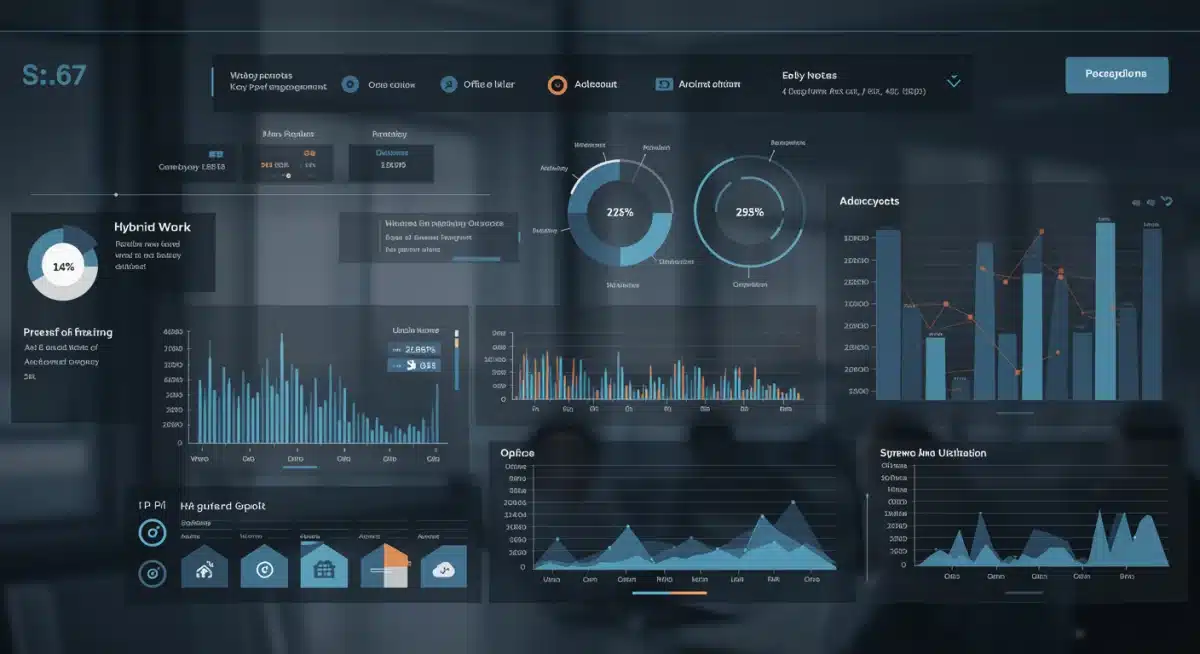
Redefining corporate culture and leadership
Hybrid work is not just about where people work; it profoundly reshapes corporate culture and demands a new style of leadership. The traditional top-down, physically centralized leadership model is giving way to one that emphasizes trust, empathy, and effective communication across distributed teams.
Leaders must learn to manage by influence rather than proximity, fostering an environment where every team member feels included and heard, irrespective of their location. This requires a conscious effort to build strong remote relationships and ensure equitable access to opportunities and information.
Challenges and opportunities for leaders
The transition to hybrid models presents both significant challenges and unique opportunities for leadership development. Navigating these complexities is crucial for sustained organizational success.
- Fostering psychological safety: Creating an environment where employees feel secure to express ideas and take risks, regardless of their physical presence.
- Ensuring equitable experiences: Preventing a two-tiered system where in-office employees receive preferential treatment or access to opportunities.
- Developing digital literacy: Equipping leaders with the skills to effectively leverage technology for communication, collaboration, and team management.
- Promoting well-being: Actively supporting employee mental health and work-life boundaries in a flexible environment.
Ultimately, a successful hybrid culture is one where trust is paramount, communication is intentional, and leadership is adaptive. Organizations that embrace these principles are better positioned to thrive in the evolving work landscape.
Technological infrastructure and cybersecurity
The backbone of any successful hybrid work model is a robust and secure technological infrastructure. As employees access company resources from various locations, often using personal devices, the demands on IT departments and cybersecurity protocols have escalated significantly.
Investment in cloud-based solutions, collaboration platforms, and advanced security measures is no longer optional but essential. This ensures seamless connectivity, data integrity, and protection against ever-evolving cyber threats, critical elements for maintaining operational continuity.
Essential technology for hybrid teams
Beyond basic internet access, hybrid teams rely on a suite of integrated technologies to function efficiently. These tools bridge geographical gaps and facilitate effective collaboration.
- Collaboration platforms: Tools like Microsoft Teams, Slack, and Zoom are indispensable for real-time communication, virtual meetings, and project coordination.
- Cloud-based productivity suites: Google Workspace and Microsoft 365 enable shared document creation, storage, and access from anywhere.
- Project management software: Asana, Trello, and Jira help teams track tasks, deadlines, and progress transparently.
- Enhanced cybersecurity measures: VPNs, multi-factor authentication, endpoint detection and response (EDR), and regular security training are vital to protect distributed networks.
Cybersecurity, in particular, has become a top priority. Companies are adopting a ‘zero-trust’ approach, verifying every user and device regardless of their location. This proactive stance is crucial for safeguarding sensitive company data and maintaining trust with clients and employees alike.
Real estate and office space redesign
The widespread adoption of hybrid work models is fundamentally altering the role and design of physical office spaces. Companies are rethinking their real estate portfolios, moving away from traditional fixed desks toward more flexible, collaborative environments.
Office spaces are transforming into hubs for collaboration, innovation, and social connection, rather than just places for individual work. This often involves reducing the overall footprint while enhancing the quality and functionality of the remaining space.
Trends in office redesign
The redesign of office spaces reflects a shift in purpose. Companies are investing in configurations that support varied work styles and foster a sense of community.
- Flexible workstations: Hot-desking and reservable desks replace assigned seating, maximizing space utilization and offering choice to employees.
- Enhanced collaboration zones: More meeting rooms, brainstorming areas, and informal gathering spaces equipped with advanced AV technology to support hybrid meetings.
- Focus on well-being: Incorporating elements like natural light, green spaces, ergonomic furniture, and quiet zones to promote employee comfort and mental health.
- Smart office technology: Sensors to track space utilization, smart booking systems, and integrated climate control to optimize the office experience.
The goal is to create an appealing and functional environment that draws employees to the office for specific purposes, such as team building, strategic planning, or mentorship, while still respecting their preference for remote work for focused tasks.
Challenges and opportunities for businesses by 2025
As U.S. businesses navigate the hybrid work landscape towards 2025, they face a unique blend of challenges that demand innovative solutions and opportunities that promise significant competitive advantages. Understanding both sides of this coin is critical for strategic planning.
One primary challenge is ensuring that all employees, regardless of their work location, feel equally connected, supported, and have access to professional growth opportunities. This requires intentional effort in communication, culture-building, and equitable resource distribution.
Navigating the hybrid landscape successfully
Successfully implementing and sustaining hybrid models requires ongoing adaptation and a willingness to experiment. Businesses that can master these aspects will likely gain a significant edge.
- Maintaining cohesion and culture: Preventing a ‘two-tier’ workforce where remote employees feel disconnected or disadvantaged.
- Managing diverse work styles: Accommodating different preferences for in-office versus remote work, ensuring fairness and flexibility.
- Ensuring equitable career progression: Developing clear pathways for advancement for both remote and in-office employees.
- Adapting regulatory and compliance frameworks: Addressing legal and tax implications for employees working across different states or even countries.
The opportunities, however, are substantial. Businesses can achieve greater resilience, access a wider talent pool, reduce overheads, and potentially boost employee satisfaction and retention. The key lies in strategic planning, continuous evaluation, and a people-first approach to hybrid model implementation.
| Key Aspect | Description |
|---|---|
| Work Flexibility | Hybrid models offer employees greater control over their work location and schedule, enhancing work-life balance. |
| Talent Acquisition | Companies can access a broader, geographically diverse talent pool, improving recruitment strategies. |
| Operational Efficiency | Potential for reduced office overheads and optimized resource allocation through flexible space utilization. |
| Cultural Shift | Demands new leadership styles focused on trust, empathy, and inclusive communication across distributed teams. |
Frequently asked questions about hybrid work in the U.S.
The primary benefit is enhanced flexibility and resilience. Hybrid models allow businesses to adapt quickly to changing circumstances, maintain productivity with a distributed workforce, and attract top talent by offering desired work-life balance options.
Hybrid work necessitates a shift towards a culture built on trust, autonomy, and transparent communication. Leaders must actively foster inclusion for both remote and in-office employees to prevent a two-tiered system and maintain team cohesion.
Key investments include robust collaboration platforms, cloud-based productivity suites, advanced cybersecurity measures (like VPNs and multi-factor authentication), and tools for project management to ensure seamless operation and data security.
Yes, hybrid work is already driving a redesign of office spaces. Offices are becoming hubs for collaboration and social interaction, often with smaller footprints but more flexible, technologically advanced, and amenity-rich environments to attract employees.
Leaders face challenges in ensuring equitable opportunities, maintaining team cohesion across locations, fostering psychological safety, and adapting management styles to effectively lead distributed teams without relying on physical oversight.
Conclusion
The trajectory of work in the U.S. is undeniably set towards hybrid models, marking a fundamental and lasting transformation in business operations by 2025. This shift, while presenting its share of complexities, unlocks unprecedented opportunities for businesses to enhance resilience, broaden talent acquisition, optimize costs, and significantly improve employee satisfaction. Success in this evolving landscape hinges on strategic foresight, continuous technological adaptation, and a deep commitment to fostering an inclusive, trust-based culture that empowers every employee, regardless of their working location. The future is flexible, and U.S. businesses are poised to redefine what productivity and engagement truly mean.